How to Water Rose Bushes the Right Way for More Beautiful Blooms
I still remember the year I nearly killed my grandmother’s prized heirloom roses. They were gorgeous plants—deep crimson petals that looked like velvet in the morning light—but I was convinced more water meant more love. I’d sprinkle them every single day, sometimes twice, watching the leaves eventually turn yellow and papery. Turns out, I was drowning them with good intentions.
That’s when I realized most people don’t actually know how to water rose bushes the right way for more beautiful blooms. We assume watering is straightforward: grab the hose, turn it on, call it done. But roses are particular. They’re not fussy for no reason—they’ve just evolved with specific needs. Once I figured out the right approach, everything changed. My blooms got bigger, healthier, and lasted longer in the vase.
If you’re here because your roses look a little sad, or you’re starting fresh and want to get it right from the beginning, I’ve got you. Let me walk you through exactly what I learned—and what actually works.
It’s not too late to grow your own food; check out these 9 vegetables to plant before July ends to kickstart a thriving fall garden.
Why the Right Watering Matters More Than You Think
Here’s the thing: roses need water, obviously. But the way you water them is what separates mediocre blooms from the kind that make you stop and stare every morning.
When you water incorrectly, you’re not just failing to nourish the plant. You’re actually inviting problems—fungal diseases that creep in when foliage stays wet too long, root rot that develops when soil is constantly soggy, or stress that weakens the plant so it can’t fight off pests. On the flip side, water the right way and you’re strengthening the entire plant system, encouraging deeper root growth, and giving your roses the stability they need to produce those full, fragrant blooms you’re after.
I’ve learned that proper watering is honestly one of the easiest ways to improve your roses’ health. It costs nothing extra. It just requires knowing what to do and when to do it.
Understanding Your Rose Bush’s Actual Water Needs
Roses need about 1 to 1.5 inches of water per week. Sounds simple, right? But here’s where it gets real: that number changes depending on your climate, soil type, and the specific variety you’re growing.
If you’re in a hot, dry climate like I experience for part of the year, you might need to water twice a week during peak summer. If you’re in a cooler region or it’s rained recently, you could go longer between waterings. The key is learning to read your soil, not just following a rigid schedule.
When I check whether my roses need water, I stick my finger about 2 inches into the soil near the base of the plant. If it feels dry at that depth, it’s time to water. If it’s still moist, I wait another day or two. This simple test has saved me from overwatering more times than I can count.
Your soil type matters too. Sandy soil drains quickly, so you’ll need to water more often but perhaps in smaller amounts. Clay soil holds moisture longer, so you can go a bit longer between waterings. Most roses prefer slightly moist (not waterlogged) soil that drains well. If your soil is heavy clay, amending it with compost before planting your roses is worth the effort—I’ve done this and noticed an immediate improvement in plant health.
Transform your yard from plain green to an all-season color show with these 17 spectacular flowering shrubs that guarantee continuous blooms from spring to fall.
The Best Time to Water Rose Bushes
Timing isn’t just about convenience. It’s about giving your roses the best possible conditions to thrive.
Early morning is genuinely the sweet spot. I typically water between 6 and 8 a.m., before the day heats up. Why? Because the soil is cool, so water soaks in deeply rather than evaporating. The foliage also has all day to dry out naturally, which dramatically reduces fungal issues. Roses are prone to black spot, powdery mildew, and other fungal problems when their leaves stay wet overnight.
Late afternoon watering is my second choice—around 4 to 6 p.m.—though not ideal because leaves might stay damp into the evening. If it’s truly a choice between late afternoon and not watering at all, obviously water your roses. But if you can swing it, morning is better.
I’d actually avoid midday watering even though it seems logical (the heat of the day, more water needed). Here’s why: water droplets on leaves can act like tiny magnifying glasses, and the intense sun can actually scorch the foliage. Plus, you lose more water to evaporation, so you’re not being efficient with your watering.
Never water in the evening or night. I learned this the hard way when I got lazy one season and figured evening watering was “close enough.” The result? Wet foliage sitting all night became a breeding ground for disease. My roses struggled for weeks after that.
How to Water Rose Bushes Properly: The Right Technique
This is where most people get it wrong. They use a spray nozzle and sprinkle the top of the plant, confident they’re doing a good job. But that’s actually one of the things that causes the most problems.
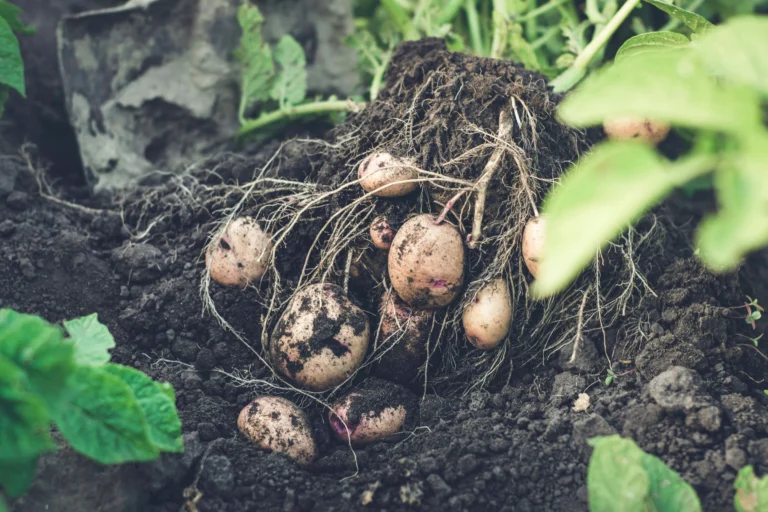
Safeguard your potato crop from hungry beetles and boost your soil’s nutrients by growing these 10 strategic companion plants right next to them.
Here’s the right technique:
Water at the soil level, directly around the base of the plant. Aim for the ground, not the foliage. A soaker hose is genuinely the best tool for this—you can set it up and forget it, and the water seeps slowly into the soil exactly where it’s needed. Drip irrigation works similarly. If you don’t have either, a regular hose with a gentle stream (not a powerful spray) works fine. Just point it at the soil and let it run slowly for 10-15 minutes per plant, depending on your soil and how thirsty the roses are.
The goal is to water deeply and thoroughly. You want that moisture reaching down to where the roots actually live—usually 12-18 inches deep. This encourages roots to grow deeper, which makes the plant more drought-resistant and stable over time. Shallow, frequent watering creates shallow roots, which means the plant is vulnerable the moment conditions get tough.
When I water, I usually spend 15-20 minutes on each established rose plant, making sure the water is soaking in gradually. It’s not glamorous, but it works. For new plants in their first year, I water more frequently but in smaller amounts—every few days, making sure they never dry out completely while they’re establishing.
Deep Watering vs. Shallow Watering: Which Actually Works
I see a lot of confusion about this, so let me be clear: deep watering wins, no contest.
Shallow watering—the quick sprinkle method—might give you an immediate sense of accomplishment, but it’s actually training your roses to develop weak, shallow root systems. These plants then struggle in heat, wind, and dry spells. Plus, shallow watering often wets the foliage more, increasing disease risk.
Deep watering—giving the plant a thorough soaking less frequently—creates strong, resilient roses. The roots are forced to grow downward to find moisture, which anchors the plant and helps it access water during natural dry periods.
Here’s my actual routine: I deep water my established roses about twice a week during growing season, depending on rainfall and temperatures. Each session is a solid 15-20 minute soak at soil level. During cooler months or if we’ve had good rain, I might only water once a week. New roses get more frequent but gentler watering until they’re well-established (usually by the second season).
The difference in plant vigor is noticeable. Roses that get deep, infrequent watering produce thicker stems, larger blooms, and seem genuinely more robust.
Watering Different Rose Varieties
Not all roses are created equal when it comes to watering needs.
Climbing roses and shrub roses tend to be more drought-tolerant once established, especially old-fashioned varieties. I don’t baby these as much, and they honestly appreciate a drier soil. Established climbers might only need deep watering once a week even in summer.
Hybrid teas and floribundas (the classic garden roses people typically grow) need more consistent moisture. These are thirsty plants. If you’re growing these varieties, plan on regular, deep watering throughout the growing season.
Knockout roses and other modern shrub roses are generally more forgiving and disease-resistant, but they still perform better with consistent, proper watering. They won’t die if you miss a watering, but they’ll produce more blooms if you don’t.
Miniature roses in containers need special attention. Container soil dries out faster than ground soil, so I check mine daily and water whenever the top inch feels dry. Container roses might need daily watering during hot weather, while the same variety in the ground only needs it twice a week.
The takeaway: know your variety. If you’re not sure, the nursery tag usually gives you clues. “Drought tolerant” doesn’t mean you can ignore it, but it means you can space out waterings more. Hybrid teas won’t say that because they’re not.
Reading the Signs: When Your Roses Need Watering Adjustments
Your roses will tell you if something’s wrong. You just have to know what to look for.
Wilting leaves despite moist soil usually means overwatering. The roots are suffocating, unable to absorb oxygen. If this is happening, you need to improve drainage—add compost, space plants better so air circulates, or consider raised beds. Let the soil dry out a bit more between waterings.
Leaves that look dull, curled, or papery signal underwatering. The plant is stressed and thirsty. Increase your watering frequency and depth. But do it gradually—don’t suddenly drench the soil after weeks of neglect, as this can shock the plant.
Yellow leaves can mean several things, but combined with wet soil, it’s almost always overwatering. Let the soil dry out between waterings.
Brown leaf tips often indicate inconsistent watering—the plant gets dry, then suddenly wet again. This stresses the foliage. Aim for steady, consistent moisture without extremes.
Fewer blooms than expected might mean watering issues are weakening the plant’s ability to flower. Make sure you’re watering deeply and consistently, not shallow and random.
I also pay attention to the soil itself. If the soil pulls away from the edges of the planter or feels rock-hard, it’s way too dry and probably hydrophobic (water won’t absorb easily). If it’s soggy and dark, and you can squeeze water from it, you’re overwatering.
Common Mistakes to Avoid
Let me save you some of the pain I experienced.
Mistake #1: Overhead watering. Spraying water over the entire plant might feel thorough, but it wets the foliage, which invites fungal diseases. Water at the base. Always.
Mistake #2: Watering on a schedule instead of on need. You’re not watering because Wednesday is watering day. You’re watering because the soil is dry. Check first, always.
Mistake #3: Shallow, frequent watering. This creates weak roots and encourages fungal issues on the foliage (since it’s wet more often). Go deep and less frequently instead.
Mistake #4: Watering in the evening. Just don’t. Wet foliage overnight is a disease waiting to happen.
Mistake #5: Assuming more water = healthier plant. It doesn’t. Overwatering is actually one of the most common reasons roses struggle. More is not better here.
Mistake #6: Ignoring your specific climate. If you live somewhere hot and dry, you’ll water differently than someone in a humid, rainy region. Adjust to your actual conditions.
Mistake #7: Watering new plants like established ones. New roses need more frequent, gentler watering as they establish. Established roses need deeper, less frequent watering. These are different strategies for different needs.
A Quick Reference Guide
Here’s a simple checklist you can actually use:
| Condition | What to Do |
|---|---|
| Soil is dry 2+ inches down | Water deeply for 15-20 minutes |
| Soil is moist at 2 inches | Wait another day or two |
| It’s cooler/rainy period | Reduce frequency; check soil first |
| Peak summer heat (85°F+) | May need twice-weekly deep watering |
| New roses (first year) | Water every 2-3 days, gentler soaking |
| Established roses (year 2+) | Deep watering 1-2x weekly depending on weather |
| Roses in containers | Check daily; water when top inch is dry |
| Early morning or late afternoon | Best times; early morning ideal |
| Evening or midday | Avoid these times |
Frequently Asked Questions
Final Thoughts: Your Roses Are Waiting
Honestly, the shift in my roses happened pretty quickly once I stopped treating watering like a thoughtless chore. When I started checking the soil, watering deeply at the base in the early morning, and letting the plant guide me on frequency, everything improved. The blooms got fuller. The stems got thicker. Even the foliage looked healthier—less prone to spotted leaves and brown edges.
The beautiful thing is, this isn’t complicated or expensive. You don’t need fancy equipment (though a soaker hose is genuinely worth it). You just need to pay attention, be consistent, and resist the urge to overdo it.
Your roses have been living things for millions of years. They know what they need. You’re just learning to listen. Start with these techniques, observe your plants, and adjust based on what you see. Within a season, you’ll have a feel for exactly what your garden needs. And I promise you, those first blooms that result from proper watering—they’ll be worth it.